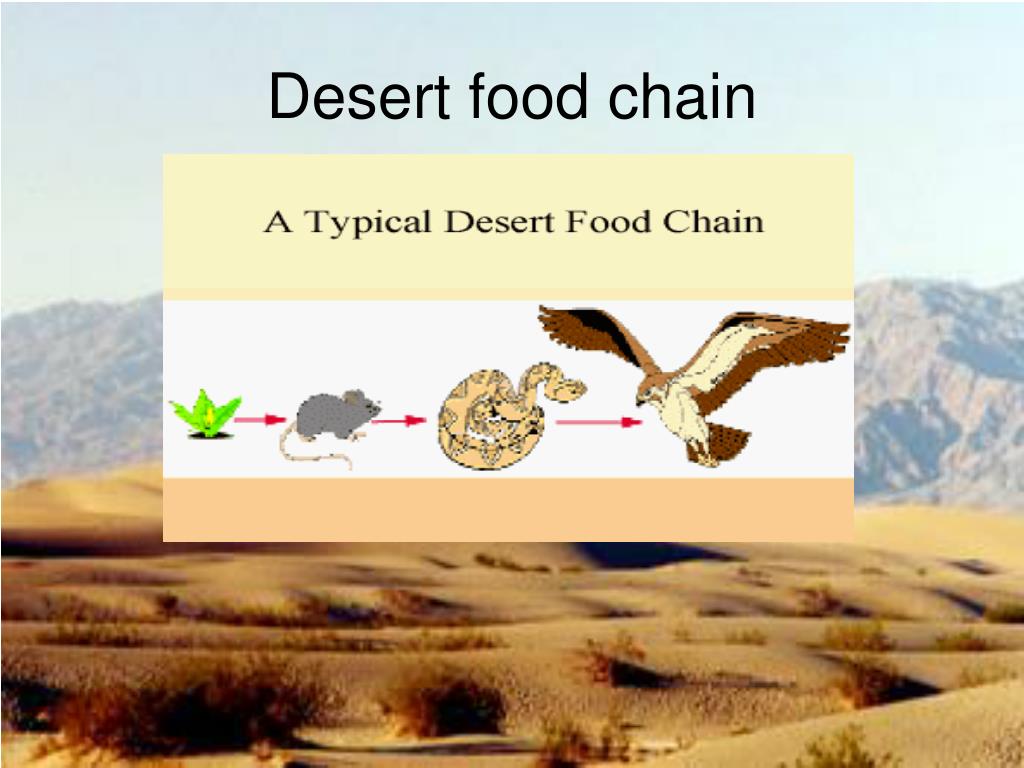
Sahara Desert Food Chain Biology Diagrams This (Image 2) is the food chain of a meerkat. The sun's energy is given to plants. The insects are next in the food chain in which their energy is then given to the meerkats or other small animals once eaten. The snakes and birds are getting their energy from the the meerkats. Which are then either eaten by lizards, eagles, or coyotes. Meerkats are superbly adapted for foraging in the desert. The majority of meerkat prey is found underground, sheltering from the glare of the Kalahari sun. With strong front legs and curved, non-retractable claws, meerkats are perfectly designed to move a lot of sand or soil in a hurry in order to reach these tasty morsels.
In the wintertime, when food is scarce, they have been known to eat roots and plants. If a meerkat comes across another animal that it does not know how to kill, it will often ignore it or walk away from it. Meerkats in captivity typically eat a diet of vegetables and fruits, as well as meat and insects. However, their diet may vary depending

Food chain & pyramid Biology Diagrams
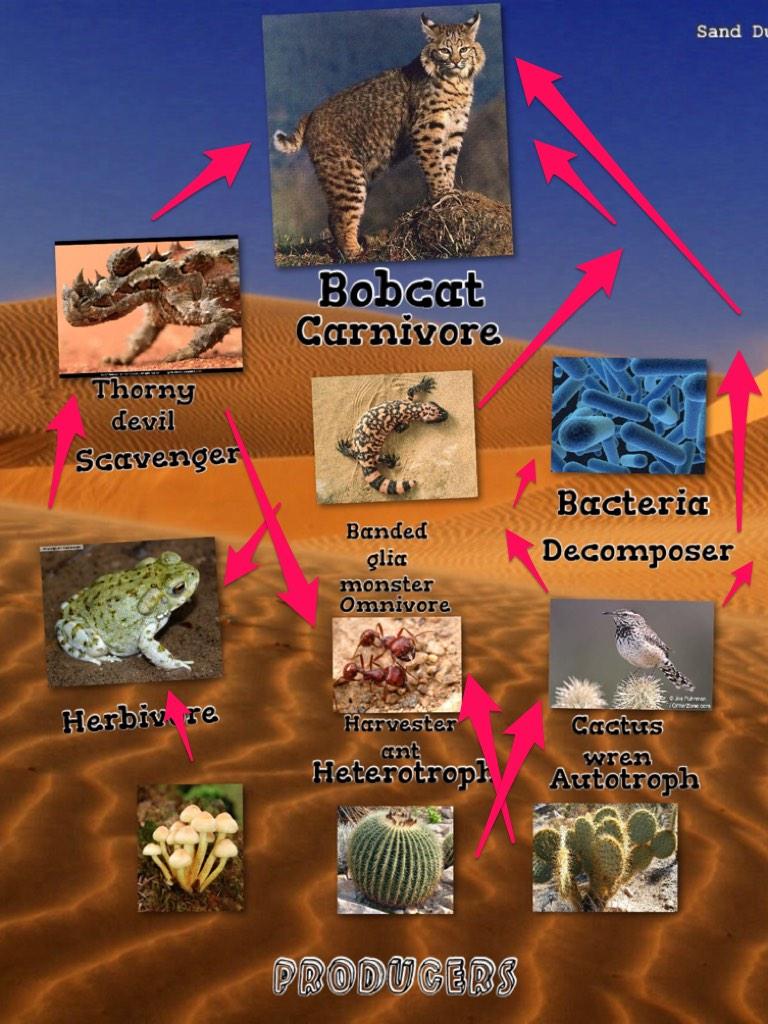
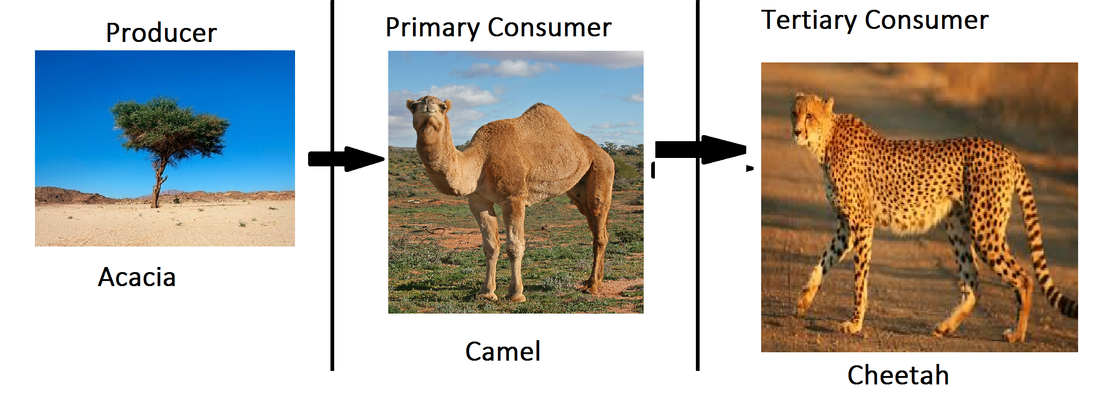
A desert food chain is a graphical representation showing who eats whom and thus the flow of energy in the desert biome. Like other food chains, there are two main types of organisms in a desert food chain: producers and consumers. Producers are organisms that make their food. Usually, plants and microorganisms are producers.
The meerkat, once thought of as a domesticated animal that was a benign member of the household, can unintentionally become a predator. This highlights the complex relationship between wildlife and humans. Canines may be present in suburban and rural areas, where meerkats can encounter them. They could view them as food.
The Diet and Feeding Habits of the Meerkat Biology Diagrams
Meerkat Food Chain. In the food chain of meerkats, the sun is the overall source of energy. Producers are plants that get energy from the sun and prepare their food through photosynthesis. Primary consumers in this food chain are insects and small mammals that consume plants and other things of plant origin.
